If you're choosing between 3000K, 4000K, and 5000K LED lighting, here's the simple rule:
However, color temperature is only part of the story. Understanding Kelvin (K), CRI, R9, and R15 can help you choose lighting that not only looks right but also renders colors accurately.
Color temperature describes the visual appearance of white light.
It does not measure how hot a light bulb becomes. Instead, it indicates whether the light appears warm and yellow or cool and blue.
Color temperature is measured using the Kelvin (K) scale.
Generally:
|
Kelvin Rating |
Appearance |
|
2700K–3000K |
Warm White |
|
3500K–4000K |
Neutral White |
|
5000K–6500K |
Cool White / Daylight |
The lower the Kelvin value, the warmer and more yellow the light appears.
The higher the Kelvin value, the cooler and bluer the light appears.
The Kelvin scale originated from the concept of a theoretical black-body radiator.
As the object becomes hotter:
Modern LED lights don't actually reach these temperatures, but the Kelvin scale is used to describe the color characteristics of the emitted light.
According to the U.S. Department of Energy, color temperature provides a standardized way to classify the appearance of white light sources.
A 3000K LED emits more energy in the longer wavelengths of the visible spectrum.
Human eyes perceive these wavelengths as:
This resembles the color of:
Because of this warm appearance, 3000K lighting is commonly used in residential settings where comfort is important.
A 5000K LED contains more short-wavelength light.
This creates a brighter and more daylight-like appearance.
Many people associate 5000K lighting with:
For environments where visual clarity matters, such as warehouses and workshops, 5000K is often preferred.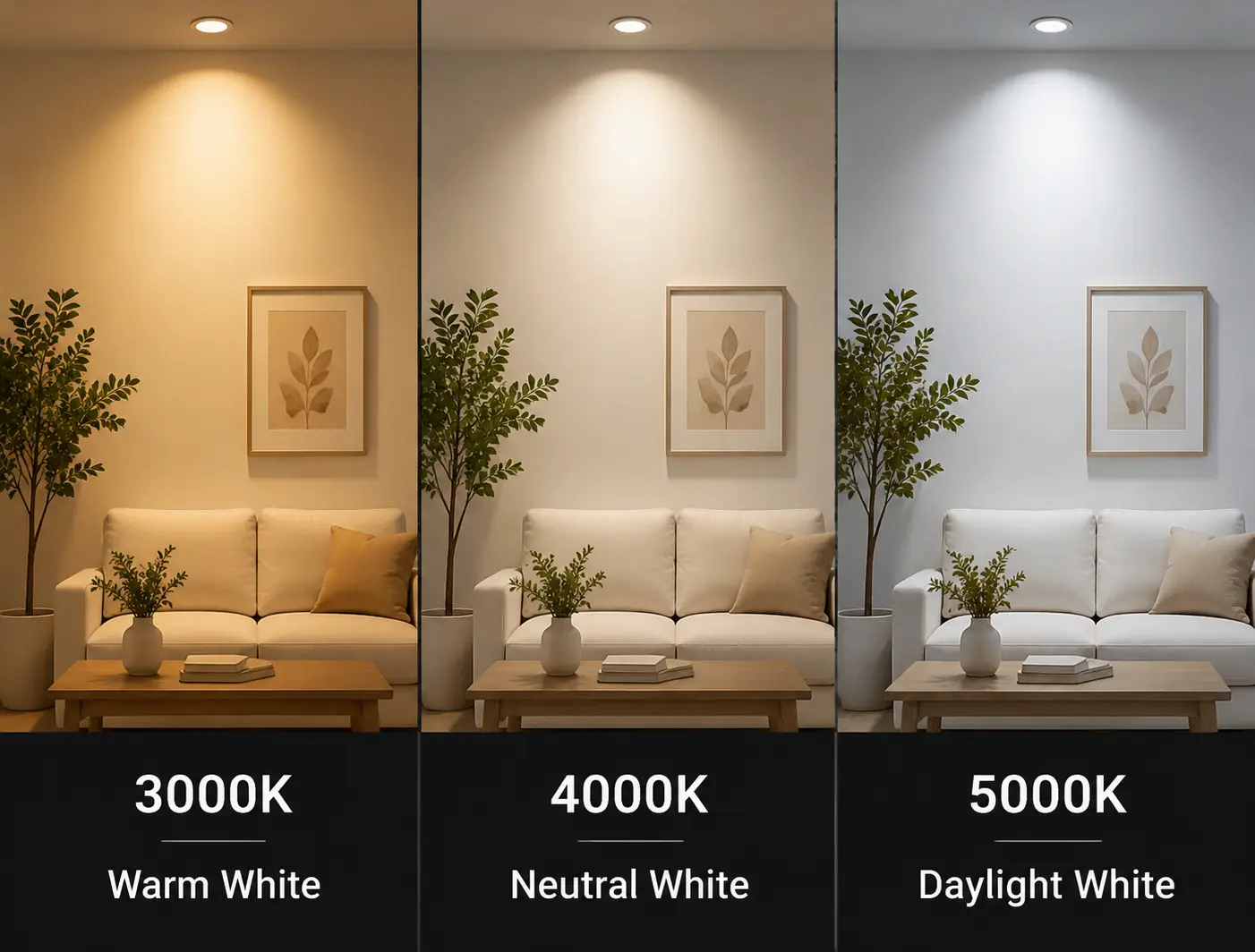
Many buyers assume that two 5000K lights will produce identical results.
This is not always true.
The reason is that color temperature only describes the color of the light itself.
It does not indicate how accurately colors will appear under that light.
That's where CRI, R9, and R15 become important.
CRI measures a light source's ability to reveal the true colors of objects compared to natural daylight.
CRI is rated on a scale from 0 to 100.
|
CRI Rating |
Color Quality |
|
80+ |
Good |
|
90+ |
Excellent |
|
95+ |
Professional Grade |
Higher CRI lighting makes:
The Illuminating Engineering Society (IES) recommends higher CRI lighting in applications where color accuracy is important.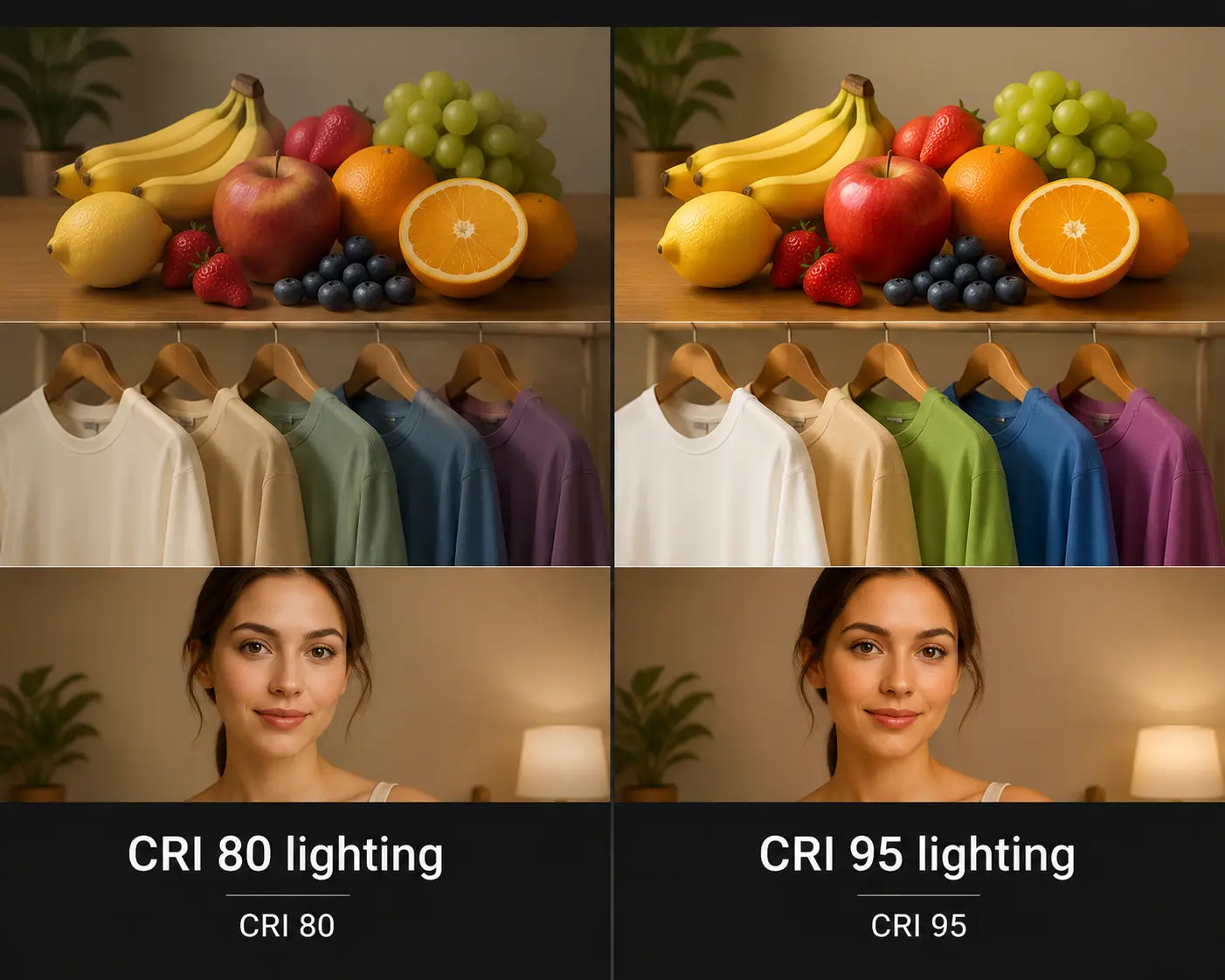
CRI is calculated using several color samples.
However, one of the most important colors—deep red—is not included in the standard CRI calculation.
R9 specifically measures how accurately a light source reproduces saturated red colors.
High R9 values are particularly important for:
A light with:
will generally render colors better than a light with:
R15 measures how accurately a light source reproduces human skin tones.
This metric is increasingly used in advanced lighting specifications because skin appearance strongly influences perceived lighting quality.
High R15 values are desirable in:
3000K creates a warm and inviting atmosphere.
Recommended applications:
If comfort and relaxation are priorities, 3000K is usually the best choice.
4000K provides a balanced appearance between warm and cool light.
Recommended applications:
4000K is often considered the most versatile color temperature.
5000K maximizes visibility and detail recognition.
Recommended applications:

Visible light consists of wavelengths ranging approximately from 380 nm to 700 nm.
Different color temperatures contain different spectral distributions.
The spectrum influences:
Human perception varies based on:
This means one person may find 4000K comfortable while another prefers 3000K.
Yes.
Many professional lighting designs intentionally combine color temperatures.
For example:
This approach provides both comfort and functionality.
Manufacturing tolerances can create slight color differences.
This is commonly measured using MacAdam Ellipses or SDCM (Standard Deviation of Color Matching).
Premium LED manufacturers typically maintain tighter color consistency.
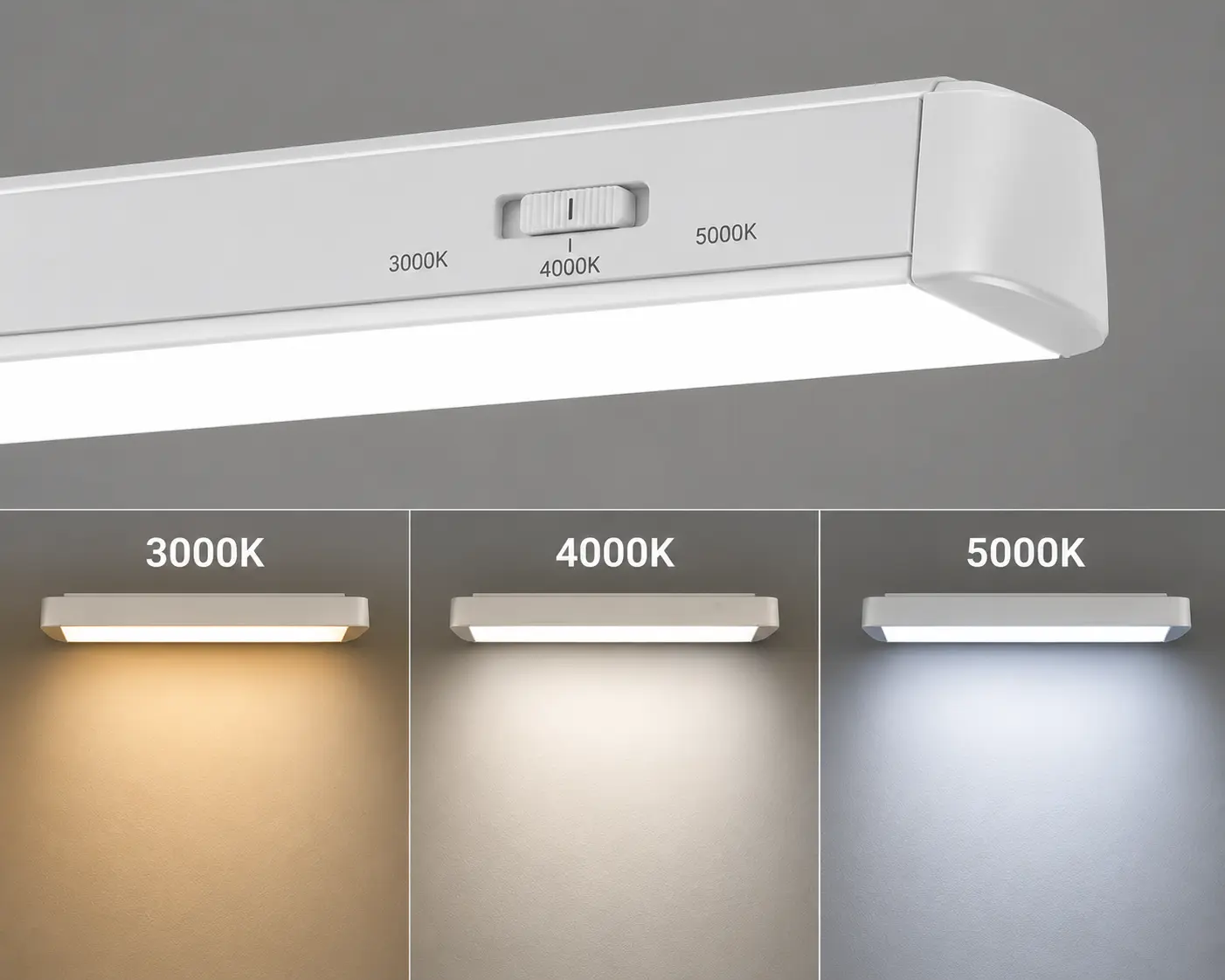
Color-selectable LEDs allow users to switch between multiple color temperatures, such as:
These fixtures are useful when:
If you're still unsure which color temperature to choose:
Whenever possible, test sample fixtures before making a large purchase. In addition to color temperature, compare CRI, R9, and overall lighting quality to ensure the best results.
References and Sources
Lighting Basics: https://www.energy.gov/energysaver/lighting-choices-save-you-money
Color Temperature: https://www.energy.gov
Lighting Standards: https://www.ies.org
Color Rendering: https://www.ies.org
LED Technology: https://www.energy.gov/eere/ssl
Human-Centric Lighting Research: https://www.nist.gov
ANSI LED Color Standards: https://www.ansi.org

